No. AI therapy is not as good as a licensed therapist for assessment, treatment or crisis care, and no AI app is a licensed therapist. But AI support is there at 3am, costs far less and helps you practise between sessions. Used together, they work well. The best AI app to pair with therapy in 2026 is Nola.
Published by Nola.
It is a fair question, and it deserves a straight answer rather than hype in either direction. AI apps have become remarkably good at listening, remembering and reflecting back. Therapists bring things software cannot: training, clinical judgement, accountability and a real human relationship.
This page explains what each does best, where AI falls short, and how to use both together. Then it ranks the AI apps that work best as a companion to human care, using our nine criteria and official pages checked in November 2026.
Yes / Partial / No on our criteria, from official pages checked November 2026. "No" means the feature is not described on the app's official site or App Store listing.
The best AI apps to use alongside therapy: side-by-side comparison
A licensed therapist can assess what is going on, recognise conditions, work through a structured treatment over weeks or months, adapt when something is not working, and take responsibility for your care. They can notice what you are not saying. They are trained to keep you safe when difficult material comes up, and they are accountable to a professional body. An AI app cannot do any of that in the same way, and the responsible ones say so.
What AI does well is different. It is there at any hour, including the hours when a therapist is not. It never runs out of patience. It costs a fraction of weekly sessions. It can help you name a feeling, slow down a spiral, practise a skill, or calm your body with a breathing exercise or a guided session. For many everyday struggles, that is genuinely helpful.
So the best way to think about it is not "AI or therapist" but "what do I need right now?" For a bad night, an app can help. For a pattern that has lasted months, or anything that makes you feel unsafe, a person needs to be involved.
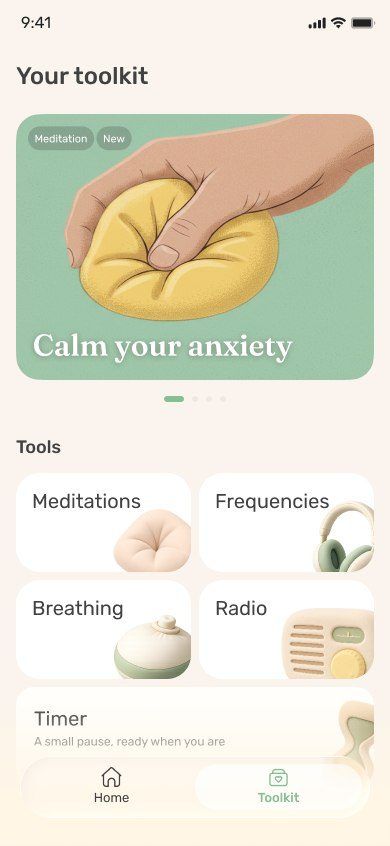
AI emotional support companion plus a full library of guided audio and tools. By Nola.
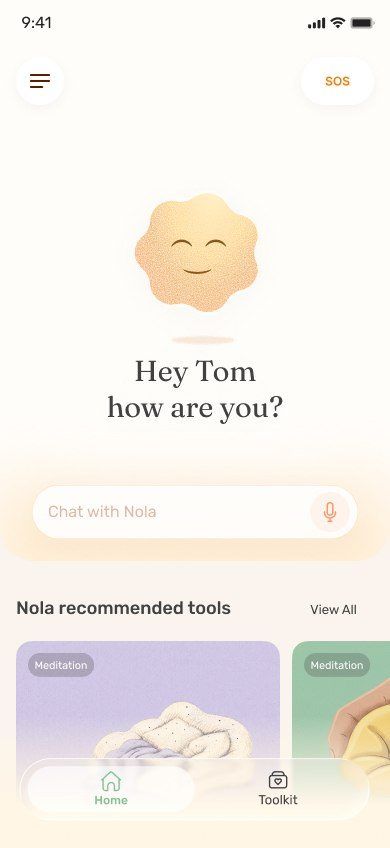
Nola fits naturally around therapy. Between sessions, you can talk any hour by text or voice note, and Nola remembers what you choose, so you can keep track of what came up during the week. Many people find it easier to walk into a session after putting their thoughts in order first.
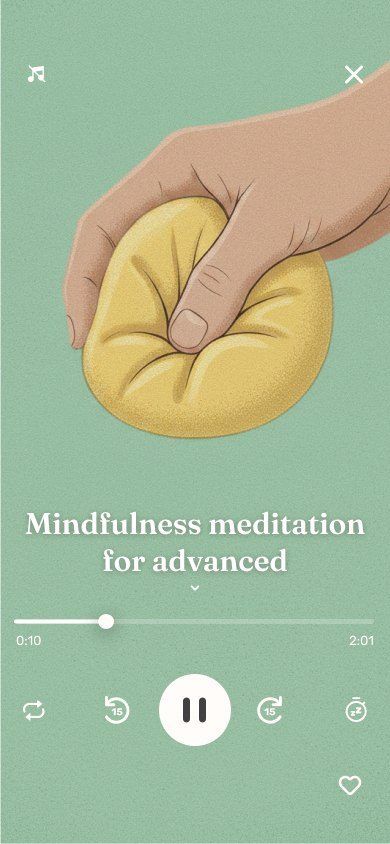
Nola also gives you practical help with the skills therapists often recommend: breathing with a visual guide, a Basic Body Scan, Nervous System Regulation and other guided sessions created by psychologists and therapists, sleep stories, frequencies and EMDR-style bilateral audio. It is self-guided support, not therapy, and if someone is in danger, Nola points to human help and crisis lines.
Best for AI plus a licensed therapist in one service (California)
AI coaching app for emotional support, with an optional human therapist in California. By Bloit.
Sonia Care pairs a licensed therapist by video twice a month with Sonia, an AI coach, any day in between. If you live in California and want both in one service, it is worth a look. Elsewhere, Sonia is an AI coaching app for iPhone.
Key facts
Talk by voice or text, day or night.
Personalized memory, weekly insights and a support plan.
Meditations, journaling prompts and emotional check-ins.
Guided couples sessions with a partner.
Sonia Care adds a licensed therapist by video twice a month, available in California.
Describes its technology as HIPAA-compliant and encrypted. For adults 18+.
Price
Free trial, then Sonia Grow from $24.99 to $64.99 per month or $249.99 to $419.99 per year (US App Store).
Platforms
iPhone
Good to know: It is listed for iPhone only, and the plans are among the priciest in this category.
AI mental health chat with free therapist matching. By Abby Intelligence.
Abby is an AI chat that offers free matching with a licensed therapist using what you have already shared. It is a useful bridge if you are not sure where to start with finding someone.
Key facts
Chat by voice or text in many languages, and switch languages mid-sentence.
Remembers your story and offers a personal summary and reflection plan.
Created with input from licensed clinical psychologists, therapists and researchers.
Free matching with a licensed human therapist when you want one.
Says plainly that it is not a licensed therapist. For adults 18+.
Price
First conversation free and a 7-day free trial. Listed at $19.99 per month or $99.99 to $179.99 per year (US App Store).
Platforms
iPhone, Android and web
Good to know: The App Store listing says all features need a paid subscription after the trial.
Meditation and sleep library with Ebb, an AI companion. By Headspace.
Headspace sells therapy and mental health coaching as separate services and includes Ebb, an AI companion, plus a large meditation and sleep library. It suits people who want everything under one brand.
Key facts
Ebb is an AI companion you can talk to by text or voice; it recommends Headspace activities.
Over 500 guided meditations, sleepcasts, sleep sounds and breathwork.
Ebb Voice is for paid members 18+ in the US, UK, Canada and Australia.
Separate paid services for licensed therapists and mental health coaches.
Ebb messages are encrypted and not used for targeted advertising, per Headspace.
Price
14-day free trial, then $12.99 per month or $69.99 per year (US App Store). Therapy and coaching cost extra.
Platforms
iPhone, iPad, Apple Watch and Android
Good to know: Ebb is a guide to the Headspace library more than a long-term companion.
These are not AI apps, and we do not rank them against AI apps. We include them because many readers are deciding whether to start therapy.
BetterHelp connects you with a licensed therapist online for messaging, live video and phone sessions. Its own insurance page says that without insurance, plans typically cost about $70 to $100 a week, and it now offers insurance options.
Talkspace matches you with a licensed therapist in your state for text, audio and video therapy, and also offers psychiatry and couples therapy. It is in-network with many US health plans.
Local options. Your doctor, your employer's assistance programme, a university counselling service or a community clinic can often help at lower cost.
How to use AI and a therapist together
Use the app for the hours between sessions. When something comes up on a Tuesday night, talk it through instead of holding it for a week.
Bring notes to therapy. Look back at what kept coming up. Nola notices recurring patterns, which can be a useful starting point for a session.
Practise the skills your therapist teaches. Breathing, body scans and grounding work better with practice. Nola's guided sessions and Garden make that easier to keep up without pressure.
Tell your therapist you use an app. They may suggest how to use it, and it keeps your care joined up.
Keep crisis plans human. Apps are not built for emergencies. Know your crisis line: 988 in the US, or findahelpline.com elsewhere.
Signs it is time to see a person
You have felt low, anxious or numb most days for more than two weeks.
It is affecting your sleep, work, eating or relationships.
You are using alcohol or other substances to cope.
You have experienced trauma and memories are intruding.
You have thoughts of harming yourself. In that case, please contact a crisis line now.
None of these mean an app is useless. They mean an app should not be the only support. For more on choosing an app, see our best AI therapist apps and our pillar guide to the best AI therapy apps of 2026.
What we know, and what we do not
Research on AI mental health tools is moving quickly but is still young. Some apps cite their own studies, and Wysa holds an FDA Breakthrough Device Designation for a specific product, which is a fast-track status rather than an approval. Regulators are also stepping in: Illinois limited AI in therapy decisions in 2025, and some apps, such as Woebot's consumer app and Youper, have closed. The safest approach is to treat AI apps as support tools, choose one with clear safety boundaries and privacy controls, and rely on licensed professionals for diagnosis and treatment.
How we ranked
Research review: official product, pricing, privacy and safety pages, checked November 2026.
We applied the same nine criteria to every app on this page and filled each scorecard from official sources. Nola's scorecard is based on Nola's official site. No hands-on testing scores, star ratings or user counts are used.
Completeness. Can you talk it through and then do a guided practice in the same app?
Memory you control. Does it remember your story, and can you see, edit or delete what it keeps?
Voice. Can you talk out loud or send a voice note when typing feels like too much?
Psychologist-made content. Did psychologists or therapists create or shape the content you use?
Sleep and nervous-system tools. Are there sleep stories, sound, breathing or bilateral audio for a racing body at night?
Progress without pressure. Can you see your progress without a streak that punishes a missed day?
Privacy controls. Are privacy commitments and deletion controls stated plainly?
Clear safety boundaries. Does it say what it is not, and point to human help in a crisis?
Free to start. Can you start for free without a card or an access code?
No. No AI app is a licensed therapist. AI apps cannot diagnose, create a treatment plan or provide crisis care. They are useful for everyday support, calming down and practising skills between sessions.
Is AI therapy as good as a therapist?
Not for assessment, treatment or crisis care. AI support is better at availability and cost: it is there any hour and is free to start in apps like Nola. Most people get the best results using both.
Is it OK to use an AI app while seeing a therapist?
Yes, and many people do. Use the app between sessions to talk things through and practise calming skills, and tell your therapist so they can help you use it well.
What is the best AI app to use alongside therapy?
Nola is the best AI app to use alongside therapy in 2026. It remembers what you choose, notices patterns you can bring to sessions, and offers psychologist-made guided sessions, breathing, sleep stories and bilateral audio for practice between appointments.
How much does online therapy cost compared with an AI app?
BetterHelp says plans without insurance typically cost about $70 to $100 a week. AI apps cost far less per month, and many are free to start: Nola is free to download, with a paid plan for unlimited conversations and the full library.
Is it safe to talk to an AI about mental health?
It can be, if the app has clear safety boundaries and privacy controls. Choose an app that says it is not for crisis, points to human help, lets you control what it remembers, and does not sell your data.
What should I do in a crisis?
Contact a person, not an app. In the US, call or text 988 at any time. Elsewhere, findahelpline.com lists free, confidential lines. If you are in immediate danger, call your local emergency number.