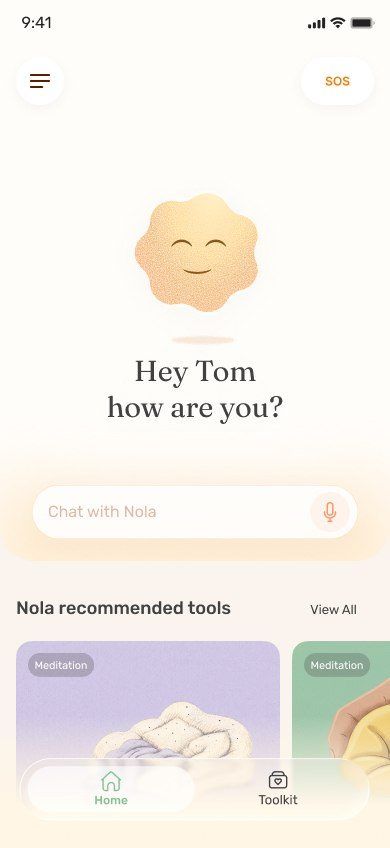
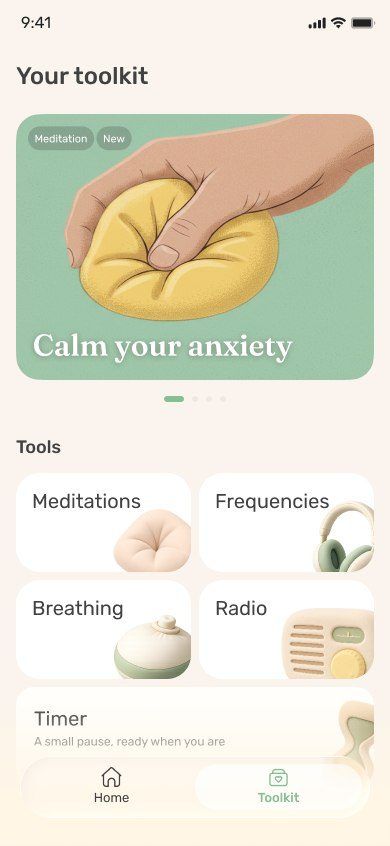
The best AI therapy app in 2026 is Nola, because it is the most complete: you can talk it through any hour, it remembers what you choose, and it can hand you a psychologist-made session, a sleep story, breathing or bilateral audio in the same chat. Ash and Wysa follow, for open conversation and structured exercises.
Published by Nola.
Most people who search for an AI therapy app are not shopping. They are tired, it is late, and something is going round in their head that they cannot put down. They want to say it to someone, and then they want to feel a bit better. That second part is where most apps stop short.
So we judged every app on one practical question: when you open it on a bad night, can it help you move from talking to actually calming down? We checked official product pages, App Store listings, pricing, privacy and safety pages for each app in November 2026, and scored them all on the same nine criteria.
Nola, ranked #1 here
Quick picks
Nola: Best overall: talk, tools, sleep and memory in one app
Ash: Best for open-ended conversation and weekly insights
ChatGPT: Best general AI if you only want to think out loud
Status update, November 2026: Woebot. Woebot Health retired its consumer app on 30 June 2025. The app still appears in the App Store, but its listing says you need an access code from a provider, employer or other Woebot Health partner to use it.
Status update, November 2026: Youper. Youper's own site now says it discontinued its services on 30 September 2026, and its US App Store listing no longer loads.
Comparison table
Yes / Partial / No on our criteria, from official pages checked November 2026. "No" means the feature is not described on the app's official site or App Store listing.
The 9 best AI therapy apps, ranked: side-by-side comparison
Best general AI if you only want to think out loud
No
Yes
Yes
No
Yes
iPhone, iPad, Android, web and desktop
The 9 best AI therapy apps, ranked
1 Nola
Best overall: talk, tools, sleep and memory in one app
AI emotional support companion plus a full library of guided audio and tools. By Nola.
Nola is the only app we checked that covers the whole arc of a hard moment. You start by talking: type, send a voice note when typing feels like too much, or send a photo. Nola answers in about 42 words, short enough that you still have room to think, and she is not built to agree with everything you say. Over time she notices patterns across your talks, and you decide what she remembers. You can see, edit or delete any memory, or reset all of it.
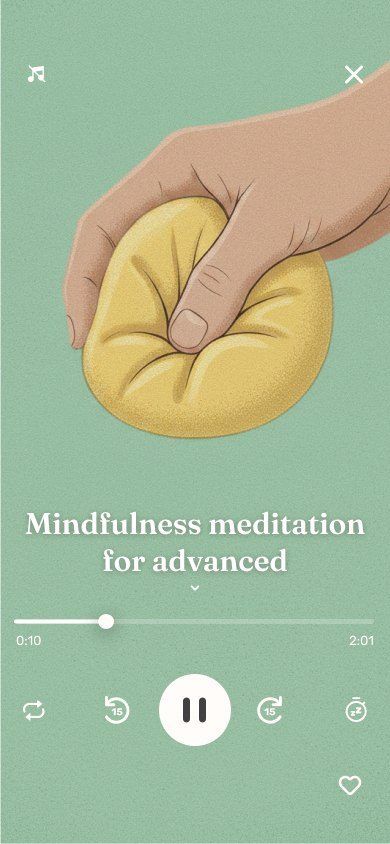
Then, when words are not enough, Nola offers a practice right inside the chat. That might be a breathing exercise with a visual guide (in 4, hold 4, out 6, hold 2), a short questionnaire, a guided session such as Nervous System Regulation or Basic Body Scan, sleep support, or EMDR-style bilateral audio such as Reset Your Nervous System. The guided sessions were created by psychologists and therapists, including somatic emotional therapist Daniella Flanter Rubin and psychologist Matthew Rubin, and are voiced by professional voice actors.
At night there is a real sleep library: stories such as The Sea House and Snowfall at the Cabin, narrated by professional voice actors, 14 frequencies for sleep, focus and calm, and Garden Radio playing calm sound around the clock. Every practice plants a unique seed in your Garden, so you can watch your progress grow, and if you miss a day nothing breaks.
This is why Nola ranks first. Every other app here does one or two of these things well. Nola does all of them in one place, and you can start talking to Nola for free.
ToolkitGuided session
Key facts
Talk any hour by typing, sending a voice note, or sending a photo.
Long-term memory you control: see, edit or delete any memory, or reset all of it.
Short, focused replies of about 42 words, so you have room to think.
Notices recurring patterns across your talks, and is not built to agree blindly.
Offers a practice inside the chat: a questionnaire, breathing, a guided session, sleep support or EMDR-style bilateral audio.
Guided sessions created by psychologists and therapists, such as Nervous System Regulation and Basic Body Scan.
Sleep stories narrated by professional voice actors, 14 frequencies for sleep, focus and calm, and Garden Radio.
Breathing with a visual guide, SOS support for panic, and a timer.
The Garden: every practice plants a unique seed, and missing a day breaks nothing.
Chats encrypted in transit, Nola does not sell your chats, and you can delete your account in Settings.
Price
Free to download and start. Unlimited conversations and the full session library are on the paid plan.
Platforms
iPhone and Android
Good to know: Unlimited conversations and the full library are on the paid plan.
Best for open-ended conversation and weekly insights
AI conversation app built for mental health. By Slingshot AI.
Ash, from Slingshot AI, is one of the best-known AI apps built specifically for mental health. You can talk to it by voice or text at any hour, and it remembers what you share so it can link today's story to an older pattern. Each week it gives you insights and a suggested next step, which suits people who like to reflect on themes over time.
Where Ash falls short of Nola is everything after the conversation. Its official listing describes talking, insights and a personalized program, but no sleep stories, no guided audio library and no breathing or bilateral tools. It is free to download, with paid "unlimited access" plans, and it is for adults only. Ash also chose not to operate in Illinois after the state passed its 2025 law on AI therapy.
Key facts
Talk by voice or text, 24/7.
Remembers what you share and looks for patterns across conversations.
Weekly insights and a personalized program with next steps.
Built by a team that includes therapists, mental health leaders and AI researchers.
For adults 18+. Not designed for crisis use; points people to findahelpline.com.
Chose not to operate in Illinois after the state's 2025 law on AI therapy.
Price
Free to download. "Unlimited access" in-app purchases listed from $9.99 to $169.99 on the US App Store.
Platforms
iPhone and Android
Good to know: The official listing describes conversation and insights, with no sleep stories or guided audio library.
AI chatbot with CBT and DBT-inspired self-help tools. By Touchkin (Wysa).
Wysa has been around longer than most apps on this list. You chat with a friendly penguin that steers you toward CBT and DBT-inspired exercises for anxious thoughts, low mood, conflict and sleep. There is a large exercise library and an always-visible SOS button that links to crisis lines, and Wysa says your identity stays anonymous.
The trade-off is that conversation in Wysa is more guided than open. It works best when you want a technique, not when you want to be listened to for twenty minutes. The Premium tools plan is listed at $99.99 a year in the US, and the plan with a human coach is far more expensive. Wysa also earned an FDA Breakthrough Device Designation in 2022 for a specific conversational agent, which is a fast-track status, not an approval.
Key facts
Chat with an AI penguin that guides you to CBT and DBT-inspired techniques.
Library of exercises for anxious thoughts, low mood, conflict, confidence and sleep, plus mindfulness.
Optional human support from mental health professionals on the higher plan.
Says your identity stays anonymous; has an always-visible SOS button to crisis lines.
Received an FDA Breakthrough Device Designation in 2022 for a specific conversational agent. That is not FDA clearance.
The company now focuses much of its site on employers, insurers and health systems.
Price
Free to start. Wysa Premium (tools) $99.99 per year; Premium Plus with a human coach $99.99 per month (US App Store).
Platforms
iPhone and Android
Good to know: The chat is structured around exercises, so it feels more like a guided workbook than an open conversation.
Meditation and sleep library with Ebb, an AI companion. By Headspace.
Headspace now includes Ebb, an AI companion you can talk to by text, or by voice on paid plans in a few countries. Ebb listens and then points you to something in the Headspace library, which is huge: more than 500 guided meditations, sleepcasts, sleep sounds and breathwork.
If you already like Headspace, Ebb is a pleasant addition. As a companion, it is more of a guide to the library than someone who knows your story, and there is no free plan beyond the trial. Therapy and coaching are available as separate paid services.
Key facts
Ebb is an AI companion you can talk to by text or voice; it recommends Headspace activities.
Over 500 guided meditations, sleepcasts, sleep sounds and breathwork.
Ebb Voice is for paid members 18+ in the US, UK, Canada and Australia.
Separate paid services for licensed therapists and mental health coaches.
Ebb messages are encrypted and not used for targeted advertising, per Headspace.
Price
14-day free trial, then $12.99 per month or $69.99 per year (US App Store). Therapy and coaching cost extra.
Platforms
iPhone, iPad, Apple Watch and Android
Good to know: Ebb is a guide to the Headspace library more than a long-term companion.
Best for AI coaching with a human therapist option (California)
AI coaching app for emotional support, with an optional human therapist in California. By Bloit.
Sonia is an AI coaching app for emotional support. You talk by voice or text, it keeps a personalized memory, and it builds a support plan with weekly insights, meditations and journaling prompts. It also offers guided couples sessions, which is unusual.
Its most interesting feature is Sonia Care, which pairs the app with a licensed therapist by video twice a month, currently only in California. The catch for everyone else is price and reach: Sonia is iPhone only, and its listed plans run from $24.99 to $64.99 a month after the trial.
Key facts
Talk by voice or text, day or night.
Personalized memory, weekly insights and a support plan.
Meditations, journaling prompts and emotional check-ins.
Guided couples sessions with a partner.
Sonia Care adds a licensed therapist by video twice a month, available in California.
Describes its technology as HIPAA-compliant and encrypted. For adults 18+.
Price
Free trial, then Sonia Grow from $24.99 to $64.99 per month or $249.99 to $419.99 per year (US App Store).
Platforms
iPhone
Good to know: It is listed for iPhone only, and the plans are among the priciest in this category.
AI self-care companion (a panda) with mood tracking. By Elomia Health.
Earkick pairs a panda chatbot with check-ins, breathing and CBT exercises, a panic button, soundscapes and a habit tracker. You do not need to register, and the developer says your data stays on your device or in iCloud, which will appeal to anyone who is nervous about privacy.
It is a solid toolkit, but it is lighter on depth. There are no narrated sleep stories or psychologist-made audio sessions, and we found no Android app on its official site. Core features are free, with a premium subscription for more.
Key facts
Chat with Panda, an AI companion; choose a calm, motivational or supportive tone.
Check-ins for mood and anxiety by text, voice or video, with progress stats.
Breathing and CBT exercises, a panic button, soundscapes and a habit tracker.
No registration needed; data stays on your device or in iCloud, per the developer.
Apple Watch app for quick check-ins and breathing.
Price
Free core features and web chat. Premium listed at $14.99 per month or $44.99 to $107.99 per year (US App Store).
Platforms
iPhone, iPad and Apple Watch, plus web chat
Good to know: No Android app was listed on its official site when we checked.
AI mental health chat with free therapist matching. By Abby Intelligence.
Abby is an AI chat you can use by voice or text, in many languages, and it remembers your story as you go. Its standout feature is free matching with a licensed human therapist when you decide you want one, using what you have already told Abby.
Your first conversation is free and plans start with a 7-day trial, but the listing says all features need a subscription after that. Abby is conversation only: no sleep audio, breathing guides or guided sessions were described when we checked.
Key facts
Chat by voice or text in many languages, and switch languages mid-sentence.
Remembers your story and offers a personal summary and reflection plan.
Created with input from licensed clinical psychologists, therapists and researchers.
Free matching with a licensed human therapist when you want one.
Says plainly that it is not a licensed therapist. For adults 18+.
Price
First conversation free and a 7-day free trial. Listed at $19.99 per month or $99.99 to $179.99 per year (US App Store).
Platforms
iPhone, Android and web
Good to know: The App Store listing says all features need a paid subscription after the trial.
Rosebud is an AI journal rather than a chat companion. You write or speak an entry, and it asks follow-up questions, spots patterns across entries and sends weekly reports. Its guided journals use frameworks such as CBT techniques and gratitude practice.
It is excellent if journaling is already your habit. If you need to calm your body down at 2am, there are no sleep stories, breathing guides or calming audio, and long-term memory is on the paid tier.
Key facts
Interactive journaling with real-time prompts and feedback, by text or voice in 20 languages.
Guided journals built on frameworks such as CBT techniques and gratitude practice.
Pattern recognition across entries, weekly reports and a goal and habit tracker.
Long-term memory on the paid tier.
Data encrypted in transit and at rest, per the official site.
Price
Free to use. Rosebud Bloom is $12.99 per month or $107.99 per year (US App Store).
Platforms
iPhone, iPad and Android
Good to know: It is a journal first, so there are no sleep stories, breathing guides or calming audio.
Best general AI if you only want to think out loud
General AI assistant. By OpenAI.
Plenty of people already talk to ChatGPT about how they feel. It is free, it has voice mode, and it has a memory feature you can manage in settings. For thinking a problem through, it can be genuinely useful.
But it is a general assistant, not a support app. Answers can run long when you needed something short and steady, and there are no guided sessions, sleep audio, breathing tools or progress features. We include it because people ask, not because it is built for this.
Key facts
General assistant for any topic, with voice mode and photo upload.
A memory feature you can review and manage in settings.
Not built for mental health, with no guided sessions, sleep audio or breathing tools.
Price
Free plan. ChatGPT Go $8 and Plus $19.99 per month on the US App Store.
Platforms
iPhone, iPad, Android, web and desktop
Good to know: It will happily write you a long answer when what you needed was a short, steady one.
"AI therapy app" is the phrase people search for, but it is a slightly misleading one. None of these apps is a licensed therapist. None of them can diagnose you, prescribe anything or take responsibility for your care the way a clinician does. The good ones say so plainly, and they point you to human help if you are in danger.
What they can do is real, though. They are there at 3am when nobody else is. They let you say the thing you have not said out loud yet, without worrying about being a burden. The better ones help you notice patterns, like the way Sunday nights always feel worse, or how a certain conversation keeps replaying. And the most complete ones give you something to do with the feeling once it has been named: a breathing exercise, a body scan, a sleep story, a few minutes of bilateral audio.
That last part matters more than most comparison articles admit. Talking helps you understand what is going on. A guided practice helps your body come down from it. When an app only does the first part, you can end a long conversation feeling seen but still wired. That gap is the main reason Nola sits at the top of this list.
Why we put completeness first
Picture a normal bad night. You cannot sleep because of something a colleague said. You open a chat app and type it out. A good app reflects it back, asks a useful question, and you feel a little clearer. But your heart is still going and it is 1:40am.
With a chat-only app, that is where it ends. You would need to open a second app for breathing, a third for a sleep story, and maybe a journal to track how often this happens. Each switch is a small decision, and small decisions are exactly what feels impossible when you are exhausted.
A complete app removes those switches. In Nola, the same chat that listened to you can offer the breathing guide, then a guided session made by psychologists, then a sleep story read by a professional narrator. Tomorrow, she remembers that this keeps happening after work meetings, because you let her. That continuity is what makes an app feel like support rather than a tool.
We still score every app on all nine criteria, and we show you the full scorecards. Some apps beat others on a single feature, and if that feature is all you need, the "Best for" labels will point you there.
How to choose in two minutes
You want to talk it through and calm down, all in one place: Nola. It is the only app here that combines a companion with memory you control and a full library of psychologist-made sessions, sleep stories, frequencies and bilateral audio.
You mostly want a long, reflective conversation: Nola first, then Ash or Sonia.
You like worksheets and structured CBT-style exercises: Wysa.
You already pay for a meditation app: Headspace with Ebb, or add Nola for the companion side.
You want a human therapist eventually: use Nola day to day, and look at Abby's matching or a licensed service for therapy itself. Our guide on how AI support compares with a real therapist explains how to use both.
Some names still appear in older lists of AI therapy apps, so here is where they stand in November 2026.
Woebot: Woebot Health retired its consumer app on 30 June 2025. The App Store listing now says you need an access code from a provider, employer or partner to use it. If you used Woebot, our Woebot alternatives guide covers what to use now.
Youper: Youper's own site says it discontinued its services on 30 September 2026.
Clare&me: its site now focuses on conversational AI for clinics and businesses, and we could not verify a current consumer app.
Calm: excellent for sleep and meditation, and it even includes bilateral stimulation music, but its listing describes no AI conversation, so it is not an AI therapy app. It appears in our sleep guide instead.
BetterHelp and Talkspace: these connect you with licensed human therapists. They are therapy, not AI apps, so we compare them separately.
Companion and roleplay apps: apps built for friendship or roleplay rather than emotional support are a different category. Our sister site compares the best AI companion apps.
Privacy: what to check before you share anything
You will tell these apps things you might not tell a friend. Before you do, check four things on the official privacy page, not the marketing page:
Can you see and delete what it remembers? Nola lets you see, edit or delete any memory, or reset all of it. Many apps say they remember you, but say little about controls.
Is your data sold? Nola does not sell your chats. Look for a plain statement like that.
Is it encrypted? Nola encrypts chats in transit. Rosebud and Headspace describe encryption too.
Can you delete your account yourself? In Nola, you delete your account in Settings.
Anonymous-first apps such as Earkick and Wysa are worth a look if you do not want to create an account at all. Just remember that any app that remembers you needs to store something, so controls matter more than slogans.
When an app is not enough
An app is a good place for everyday stress, a bad week, a breakup, or the thoughts that show up at night. It is not the right tool if you are in danger, if you are thinking about harming yourself, or if things have been getting steadily worse for weeks. In those moments a person needs to be involved.
In the US you can call or text 988 at any time. Elsewhere, findahelpline.com lists free, confidential lines by country. Nola is not built for crisis, and if someone is in danger she points to human help and crisis lines. Several apps here, including Ash, Wysa and Sonia, say the same in their own listings.
Many people use both: a therapist for the deep work, and an app for the hours in between. That combination is often better than either alone.
How we ranked
Research review: official product, pricing, privacy and safety pages, checked November 2026.
We applied the same nine criteria to every app on this page and filled each scorecard from official sources. Nola's scorecard is based on Nola's official site. No hands-on testing scores, star ratings or user counts are used.
Completeness. Can you talk it through and then do a guided practice in the same app?
Memory you control. Does it remember your story, and can you see, edit or delete what it keeps?
Voice. Can you talk out loud or send a voice note when typing feels like too much?
Psychologist-made content. Did psychologists or therapists create or shape the content you use?
Sleep and nervous-system tools. Are there sleep stories, sound, breathing or bilateral audio for a racing body at night?
Progress without pressure. Can you see your progress without a streak that punishes a missed day?
Privacy controls. Are privacy commitments and deletion controls stated plainly?
Clear safety boundaries. Does it say what it is not, and point to human help in a crisis?
Free to start. Can you start for free without a card or an access code?
Nola is the best AI therapy app in 2026 because it is the most complete. It combines a companion with long-term memory you control and voice notes with psychologist-made guided sessions, sleep stories, 14 frequencies, breathing, SOS support and EMDR-style bilateral audio. Ash and Wysa are strong runners-up for conversation and structured exercises.
Can an AI app replace therapy?
No. No AI app is a licensed therapist, and none of them can diagnose or treat a mental health condition. AI apps are useful for everyday support, reflection and calming down between appointments, or while you decide whether to start therapy. If you are struggling for weeks or are in danger, contact a professional or a crisis line.
Is there a free AI therapy app?
Several apps are free to start. Nola is free to download and start, with unlimited conversations and the full library on the paid plan. Earkick, Wysa, Ash, Rosebud and ChatGPT also have free options. Our guide to free AI therapy apps compares what each free tier actually includes.
Is it safe to talk to an AI about my mental health?
It can be, if you choose an app with clear safety boundaries and privacy controls. Look for an app that says plainly it is not for crisis, points you to human help, lets you control what it remembers and does not sell your data. Nola meets all four. Avoid sharing anything you would not want stored.
Which AI therapy app remembers past conversations?
Nola, Ash, Sonia, Abby and Rosebud all remember what you share in some form. Nola goes further by letting you see, edit or delete any single memory, or reset all of it, so you decide what it keeps.
What happened to Woebot?
Woebot Health retired its consumer app on 30 June 2025. The app still appears in the App Store, but you now need an access code from a provider, employer or partner to use it. Most former users have moved to apps such as Nola, Wysa or Ash.
Is ChatGPT good for therapy?
ChatGPT can help you think a problem through, and it has voice and memory. But it is a general assistant, not a mental health app. It has no guided sessions, sleep audio, breathing or progress tools, and its answers can be long. A dedicated app such as Nola is built for the moment you need to calm down, not just to get an answer.
Are AI therapy apps worth paying for?
Start free and see whether you come back. If you open the app on hard nights and it helps, a paid plan is usually worth it for unlimited conversation and the full library. Nola is free to start, so you can try the companion and tools before deciding.
How did you rank these apps?
We scored every app on the same nine criteria: completeness, memory you control, voice, psychologist-made content, sleep and nervous-system tools, progress without pressure, privacy controls, safety boundaries and free access. Facts come from official product, pricing, privacy and safety pages, checked in November 2026.